
Croatia: “Dok Je Srça, Bit Cei Kroacije” 8:1
- samanthagould
- Aug 15, 2020
- 12 min read

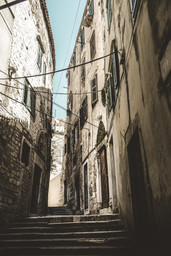


Similar to many other countries, societies and nations, Croatia is no different when it comes to facing challenges with inequality. As a fairly new country, the country’s basis of inequality is rooted in a history of endless wars, rises and falls in vastly different political ideals, a current tourism-based economy, and vast environmental differences across the country that creates unequal opportunities. In this paper, I will compare and contrast the current states of both Croatia and the United States on levels of different inequalities, such as economic, racial, educational and political areas. Additionally, I will provide a brief overview of Croatia’s economic and political history and how its development has contributed to its current state and rank in the world.
Like many European countries, Croatia has a long, rich and tumultuous history. In 300 BC, the Greeks settled along the coasts of what is now Croatia, and in 230 BC, the Romans seized control. Around the 5th century, the Roman control collapsed, and shortly thereafter, a group of Slavic migrants, called the Croats, settled in Dalmatia – an eastern coastal stretch of land – and expanded into two separate states. Once evolved, both states united under one religion – Western Roman Catholicism, instead of their neighboring religion, Eastern Orthodox of Constantinople. The middle ages proved to be hectic for Croatia, as it was often used as a political pawn and battleground.
During the French Revolution, however, the “guidelines” for Croatia as a whole began to take shape. For instance, Croatian nationalism became more prominent in political culture, and the rise of traditional customs and literature orchestrated the continuation of that nationalism into daily lifestyles. In 1847, “Croatian” was dubbed the official language, and feudalism was dually abolished. Following the Austria-Hungary feudal split, Croatia also divided, leaving a country politically torn between yearning for independence and seeking Slavic unity. Victoriously, the twentieth century arrived, and in 1918, Croatia declared its independence. Tragically, in 1929, the short-lived joys of independence were terminated by King Alexander, who implemented a royal dictatorship – and again, the country was divided – this time into two extremes: Communists vs. Fascists.
World War Two proved to be no less tumultuous than the rest of Croatia’s history, and once again, the country was used as a political chessboard, until its liberation in 1945, and communism once again emerged until a wave of nationalism surged in the sixties.
It wasn’t until the nineties, after communism had collapsed most of Eastern Europe, that Croatia once again longed for independence, and in ’91 a vote was held, and the decision was unanimous. In 1992, Croatia was nationally recognized as a free state, and modern-day Croatia has since then joined NATO in 2009 and joined the EU in 2013.
Since joining the EU in 2013, Croatian economy has certainly seen improvements. In 2008, total GDP percentages leveled out at less than 40%, but in 2015, after joining the EU, ties were strengthened, and Croatia saw a dramatic increase in GDP topping out at over 50%. From 2015-2018, Croatia, like the rest of the world, was suffering through the aftermaths of a global financial crisis, and only saw a 3% increase of economic growth in that timeframe. However, more funds were being channeled into public uses, and the country rejoiced as overall national debt dropped – still, Croatia is bound for a dramatic crash soon if several areas of economic and social boulders are not soon chipped away. The first of those issues being a tourism-based economy. True, Croatia is a diverse, breathtaking country with rolling coastal shores, white-spackled buildings glimmering on clifftops like whitecaps on the sea, and evergreen forests so deep that there are surely mystical creatures sulking among the depths, but the country has only been able to structure its economic and social molds around the tourism industry, which creates uneven patterns in development.
In addition to the struggle to find economic balance, the country is also faced with an aging populous, a rapidly-increasing level of out-migrants, and a constant demand to keep up with the global innovations and uses of the technological and industrial cultures.
Poverty:
As a whole, Croatian poverty is limited and shallow in nature – income per adult reveals a decline in poverty. According to the European and Central Asia standard poverty line, Croatia has one of the lowest poverty levels. Even still, the Croatian government is constantly striving to seek ways of implementation of inclusion memorandums – objectives of social and poverty excluded, translated into significant national policy measures. Along with aforementioned memorandum, regional structural plans are being mobilized in order to prevent internal disparities, and this is funded primarily by the EU.
Poverty levels and inequalities in Croatia are calculated by basic need – a method that identifies household average expenditure that approximately equals the cost of the minimum food bundle (2700kcals per adult). The poverty gap in this data indicates a 2.6% marginal difference between the poverty line and how far below that line the most afflicted stand. It is estimated that 40,000 are fairly deprived, and 140,000 individuals are dangerously below those levels. However, inequality in consumption-to-income ratio has maintained a steady course, which is surprising, considering Croatia consumes 30-40% more per capita than their neighboring countries. Comparison to the United States draws conclusions that these statistics are fairly similar per capita – with the U.S. fluctuation between 11-14% poverty levels; however, on such a massive scale, U.S. levels are a bit more difficult to account for accurately.
Tackling these issues is important to the overall economic levels, which seemingly have performed well within the past decade – with GDP experiencing an increase of 40% from 1996 to 2005. Exportation rates have also surged, with a 48% leap between 2000 and 2005. Within that time frame, unemployment percentages hovered between 12 and 16% - and to this day, the country struggles with bolstering consistent employment – having one of the lowest rates, at a mere 54.7% - far below the EU standard of 70%.
Addressing this issue, it is widely understood the long-term employment is more difficult to confront than its temporary counterparts. This concentration of long-term unemployment is not all that different than that of U.S. standards: marginalized groups having fewer adaptable skills stemming from a lack of education – predominantly among younger groups – leading to problems rifting a progressive economic growth and splitting the pathway to better social standards. And, much like the U.S., different regions of the country experience different situational barriers to the improvement of poverty and economic standing.
Agriculturally, Croatia has a small sector of ag-based income in comparison to other surrounding nations, with 3/4ths of farmers being self-employed, and scattered among various environmental regions, totaling 20% of all employment in eastern Croatian regions, and only accounting for 4-5% of income in all other areas.
In the heart of the country, industrial jobs contribute to 30% of employment and 19-23% in other regions – all focused primarily on food, petrol, electrical manufacturing, and ship-making. It is noted that printing and publishing is a significant industry as well. Meanwhile in the U.S., agricultural jobs only surmount to 11% of employment rates, and manufacturing-industrial jobs only account for 8.5% of all jobs but pay an approximated 12% better than other jobs.
Gender:
Attempting to smoothly transition from economics and wages into gender inequalities, it is safe to begin with gender differences – the differences between beginning-to-end of careers typically escalate to a 10% difference between men and women, with women capping out at roughly 61% of the active labor force, while men maintain a 70% stronghold. To contrast, 32% of women maintain household roles, and men make up a mere 11% of that assumed position. These inequalities are often attributed to traditional gender norms and discrimination of child-bearing aged women, who often face difficulties in finding and maintaining jobs after they have started a family. Men face pressures as well, and similar to many stereotypes and unhealthy standards, they are considered and pressured to be the main bread-winner of family units, instilling the theory of a glass-escalator situation. As a result, men earn 22% more than women – creating situations where working women are unequally set up for life – resulting in pension gaps later on when the glass ceiling is reached. Additionally, female poverty among elderly women is 35% higher than that of similarly-aged male counterparts. For similar comparisons among U.S. residents, percentage gaps between women and men in the workplace amounts to a 14% difference in wages. To no surprise, the U.S. harbors an easier life for men in the poverty situation – a 12.9% - 10.2% ratio difference between downtrodden men and women – but considerably better than that of Croatia’s tremendous differences.
Entrepreneurship among females is one of the lowest statistics in the EU – only 7% of Croatian women claiming that title, and only 12% claiming managerial roles. Elisabetta Capinnelli – World Bank Country Manager for Croatia addresses the issue: “Gender equality requires inclusive education and health services and social norms so that women can be empowered to make the necessary choices for themselves and their families. Providing women and men equal opportunities will further help Croatia compete in the global economy of the future.”
Ombudswoman representing Gender Inequality for the Republic of Croatia declared: “There is an urgent need to encourage and accelerate the process of achieving real gender equality. Women still face barriers in employment, they are paid less for the same work, and they face discrimination based on pregnancy and maternity. Women also carry a double burden of managing household, family and business obligations, are underrepresented in the economic and political decision-making and predominantly represent victims of domestic and sexual violence. Society must overcome these and all other aspects of inequality which stem from deep-rooted and persistent stereotypes and prejudices.”, thus addressing and enacting plans to counter the vast amounts of discrimination Croatian women face on a daily basis.
Furthermore, gender inequality is blended with ethnicity to create a double-edged sword of unequal access and treatment – specifically among the Roma women. As the most excluded group, the process of exclusion begins at an early age, and twisting into an ugly growth as they age – predominantly in their teens, where only 6% of Roma women graduate high school.
Racial and Ethnic Tensions:
Former Yugoslavia had high, steady levels of prejudice concerning ethnic slaves in the region, and has since then paved the path for the increased racial tensions and the uncertain outbreaks of wars in times past, which aided in splitting Yugoslavia into different nations – primarily Bosnia and Croatia. Before the wars that split Yugoslavia asunder via a violent dissolution of the region between 1984 through 1986 – the Yugoslavs were gripped by one of two mindsets: the ethnic cooperation and the installations of peace, or a crises-driven frame of mind that was still submerged in watery graves of the remains of World War II. These negative mindsets were spurred on by elitist bargaining and manipulation of the media – inspiring propaganda that choked out all ideals of racial and ethnic harmony, and instead spread a wildfire of insecurity and fear in a blaze that swept the nation. In turn, this caused nationalistic voting trends, which ultimately led to the moderates being purged, and the mass incarcerations and killings of minorities – specifically Serbs – and rising racial prejudices against the Serbs. This brings to light how nationalism is intrinsically rooted in violence and prejudice, preferring to stomp out those who are deemed as less human and less worthy of a nation’s care, rather than uniting to achieve a common, peaceful goal.
Social psychology plays an important role when sifting through the rubble of destroyed social structures concerning inequality. Political and social discontent soon turned to personal aggression towards minorities, thus indicating a mass in-group mentality that turned to hostility. Frustration-Aggression theory is a profound examination of this interaction, explaining how individual frustration can be channeled into aggression towards a specific race, with the latter being blamed for social issues. Residual effects from a war-torn country are often slow to dissipate, and that is made increasingly apparent when demographics of ethnicity and race are examined, especially in different societal and environmental regions.
Regionally, there are three major communities in Croatia, subdivided into 26 sub-regions. Constitutional regulations are implemented in all 26 areas, to ensure minority equality and access – along with educational inclusion. However, these municipalities all have differentiating approaches when handling minority rights – which are often determined by territory and resource allocations. This is especially prominent in rural areas, wherein migration to more urbanized communities resulted in a dissipated, weakened rural structure of community, tearing down tradition and cultural heritage via forced assimilation. This further weakened cohesive elements of ethnicity, where more often than not, assimilation included a collective in-group mentality – an often-painful transition into regional and professional identity rather than social and cultural ones.
In America, similar issues arise wherein minorities are often situated in communities that inhibit upward mobility – a result of both purposeful and accidental policies and structures that barricade living situation improvement, and formal job opportunities of the people residing therein, blocking both intergenerational and intra-generational mobility. In fact, modern demographics of the dispersion of Black Americans relates in a similar manner as that of historical patterns that emerged after the Civil War – a condition that mirrored Croatia’s situation of the slow dissipation of the aftermath and mindsets post-war, and has since then directed persistent impacts on inequality structures that surround African-Americans to this day.
Process of Legitimation:
As one can see, Croatia is familiar with inequalities. Having faced a history of challenges that stemmed from war, pre-conceptions, fluctuating economic standings, and geographical differences, the only way to grow as a nation will come from progressive movements and reformation.
Although economic improvement can be statistically viewed since Croatia’s joining of the EU in 2013, there are still many economic challenges faced today, specifically concerning their dependence on the tourism industry as a means of financial stability. According to BalkanInsight, Croatia has the third-fastest rate of tourism growth in the EU (Milekic, 2018). Because of the fluctuations in tourism rates, and an increasing dependence on the tourist economy, the country suffers in many areas, the foremost being the interdependent connection between tourism and the labor market (Novotny, Milekic, 2018). This is an issue that must be addressed in a comprehensive plan of reform. Naturally, in correlation to the labor market, the issue of gendered inequalities within the workforce arises. Women statistically sit at a 10% lower rate of employment than men, and a part of this comes from assigned status rank in society – women are typically considered to be subservient, whereas their male counterparts have no glass ceiling to face when it comes to upward or vertical job mobility.
To counter both the issues of gender inequality and the dependence of the tourism industry, my proposal is turning to the process of community development, which would definitely aid the country in more ways than the aforementioned issues. By utilizing the premises of community development, I would not only create year-round jobs that would contribute to the tourism industry, but simultaneously fight urbanized inequalities and poverty rates, while also improving women’s standings in the workforce.
Community Development, by definition is "a practice-based profession and academic discipline that promotes participative democracy, sustainable development, rights, economic opportunity, equality and social justice through the organization, education and empowerment of people within their communities, whether these be of locality, identity or interest, in urban and rural settings." as defined by the National Association of Community Development Extension Professionals.
As a direct beneficiary of the current state of a community, community development is also a path toward the future by nature. Ever a planned-based practice, community development searches for future paths for a community, and works on building a solid foundation for the development to thrive on. It targets population and class inequalities, institutional renovation and upkeep, the enhancement of communal spaces and the progression of economic growth. It is a gateway to a better future and to a betterment of society as a whole.
Community Development processes actively searches to better the community it serves and the people residing within – in this case, seeking to not only stabilize jobs, but to pit sexism against itself in an effort to combat sexism by creating socially viewed “domestic” roles for women – hotel management and upkeep, communal space upkeep (gardens, parks, etc.) assistant and secretary roles, and more. Although this may seem controversial in nature, it is a subtle way to introduce more women into stable roles without turning too many heads. In turn, this creates a ripple effect where community members learn effective skills pertaining to the progression and growth of their community, and this enables a more versatile and promising environment for future generations. Additionally, the strengthening of one development leads to the eventual outreach into others, creating strong bridges between multiple communities – building off one another to strengthen networking ties and overall upkeep of communities.
Furthering community development efforts would be expounding upon community outreach – targeting impoverished demographics and channeling money into educational and housing reform – as previously mentioned, the EU primarily funds regional structure maintenance, so appealing to this effort by calculating increases in economic growth and ROI via community improvements would surely result in increased funding and community upgrades. Of course, the demand for jobs would increase even before all was said and done – human researchers, data collectors, economists, construction workers, landscapers, social workers and developmental planners would all be needed in order to achieve the goals of community and economic reformation. Since community development is an ongoing process, most jobs would be maintained throughout – creating a more pleasant environment for tourists and residents alike.
Lastly, the utilization of community development efforts would not only improve communities, but the country as a whole. The networking system of improvement, economic stabilization and progressive educational reform would curb the desire for out-migration, and would improve Croatia’s overall standing within the EU. As one can see, the need for progressive reformation in the country is a pressing need and focusing all efforts within would drastically improve all aspects of the country through the expansive realm of community development and process of legitimation.
Sources:
(n.d). Minority Rights Group International - Retrieved from: https://www.refworld.org/pdfid/469cbf8f0.pdf
Duško Sekulić, Garth Massey & Randy Hodson (2006) Ethnic intolerance and ethnic conflict in the dissolution of Yugoslavia, Ethnic and Racial Studies, 29:5, 797-827, DOI: 10.1080/01419870600814247
Anthony Oberschall (2000) The manipulation of ethnicity: from ethnic cooperation to violence and war in Yugoslavia, Ethnic and Racial Studies, 23:6, 982-1001, DOI: 10.1080/014198700750018388
Kunovich, R. M., & Hodson, R. (n.d.). Taylor and Francis Online, The Sociological Quarterly, 43. doi: 10.1111/j.1533-8525.2002.tb00046.x
Investments in Gender Equality in Croatia Will Increase Opportunities for All, Says World Bank Report. (2019, March 22). Retrieved March 22, 2020, from https://www.worldbank.org/en/news/press-release/2019/03/22/investments-in-gender-equality-in-croatia-will-increase-opportunities-for-all-says-world-bank-report
Croatia: Reducing Social Exclusion and Regional Inequalities. (n.d.). Retrieved March 21, 2020, from http://siteresources.worldbank.org/INTCROATIA/Resources/CroatiaLSA_Chapter1.pdf
“Overview.” World Bank, 21 Oct. 2019, www.worldbank.org/en/country/croatia/overview
Lambert, Tim. “A Short History of Croatia.” A Brief History of Croatia, 2019, www.localhistories.org/croatia.html.
HINA. “World Bank Warns About Growing Inequality.” Total Croatia News, 2020 Total Croatia News, 25 Sept. 2018, www.total-croatia-news.com/business/31255-world-bank-warns-about-growing-inequality.
Fine, J.V.A. (2006). When Ethnicity Did Not Matter in the Balkans: A Study of Identity in Pre-Nationalist Croatia, Dalmatia, and Slavonia in the Medieval and Early-Modern Periods. Ann Arbor: University of Michigan Press. muse.jhu.edu/book/7069.
Admin, MemberClicks. “What Is Community Development?” National Association of Community Development Extension Professionals, NADCEP, nacdep.memberclicks.net/what-is-community-development-.
Milekic, Sven. “Croatia Relies Too Much on Tourism, Economist Warns.” Balkan Insight, 18 May 2018, balkaninsight.com/2018/01/26/croatia-risks-by-tying-to-booming-tourism-01-25-2018/.



Comments